


Services
Minimally Invasive Spine Surgery
Endoscopic Spine Surgery
Spinal Fractures & Trauma
Spinal Tuberculosis
Spine Infections
Degenerative Spine Conditions
Spinal Deformities
Osteoporotic Spine Fractures
Ankylosing Spondylitis
Robotic & Navigation-Assisted Spine Surgery
Scoliosis
Kyphosis
Cervical & Lumbar Disc Prolapse
Cervical Myelopathy
Lumbar Canal Stenosis
Advanced Pain Management Techniques
Minimally Invasive Spine Surgery
Endoscopic Spine Surgery
Spinal Fractures & Trauma
Spinal Tuberculosis
Spine Infections
Degenerative Spine Conditions
Spinal Deformities
Osteoporotic Spine Fractures
Ankylosing Spondylitis
Robotic & Navigation-Assisted Spine Surgery
Scoliosis
Kyphosis
Cervical & Lumbar Disc Prolapse
Cervical Myelopathy
Lumbar Canal Stenosis
Advanced Pain Management Techniques
Lumbar Canal Stenosis
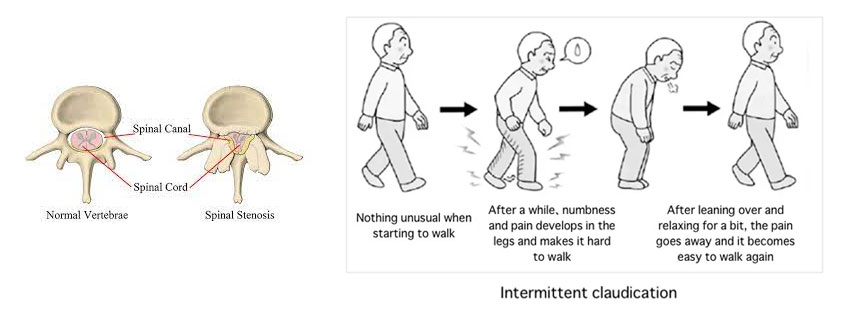
Lumbar Canal Stenosis is a narrowing of the spinal canal in the lower back, leading to compression of the spinal cord or nerve roots. It is often caused by degenerative changes such as arthritis, disc degeneration, or the thickening of ligaments.
Symptoms:
- Lower back pain
- Pain or cramping in the legs when standing or walking (neurogenic claudication)
- Numbness, tingling, or weakness in the legs
- Symptoms improve when sitting or leaning forward (spinal flexion)
Conservative Treatment Options:
1. Medications:
- NSAIDs for pain relief and reduction of inflammation.
- Muscle relaxants to alleviate muscle tension that can exacerbate symptoms.
2. Physical Therapy:
- Core-strengthening exercises and lumbar flexion exercises can reduce pressure on the spine and improve mobility.
- Stretching exercises to increase flexibility in the back and legs.
3. Epidural Steroid Injections:
- These injections can reduce inflammation around the compressed nerves, offering temporary relief from pain and other symptoms.
4. Activity Modification:
- Avoid activities that worsen symptoms, such as standing or walking for prolonged periods.
- Walking with a slight forward flexion (leaning slightly forward) or using a walker can sometimes alleviate pressure on the spinal canal.
5. Lifestyle Changes:
- Weight management and low-impact aerobic exercises like swimming can help reduce stress on the lower back.
For more severe cases, where conservative management fails to provide relief, surgical intervention, such as a laminectomy or spinal fusion, may be considered to relieve nerve compression and improve quality of life.
